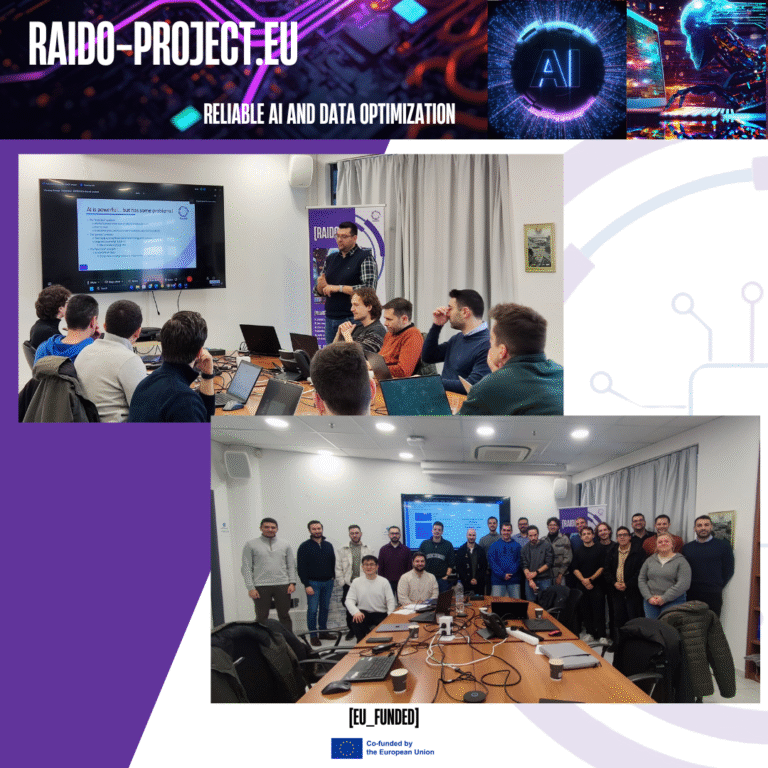
The RAIDO project recently reached a significant milestone in its mission to develop trustworthy AI with the successful conclusion of its Ethics, Societal Readiness Level (SRL), and Standardisation Workshop/Webinar.
Led by Trinity College Dublin and designed by Logos RI, with key contributions from Mathema SRL and MPAI Store, the 4 sessions took place from 03/12/2025 – 17/12/2025 and served as a critical touchpoint for aligning technical innovation with societal values.
Beyond Technical Functionality: Why SRL Matters
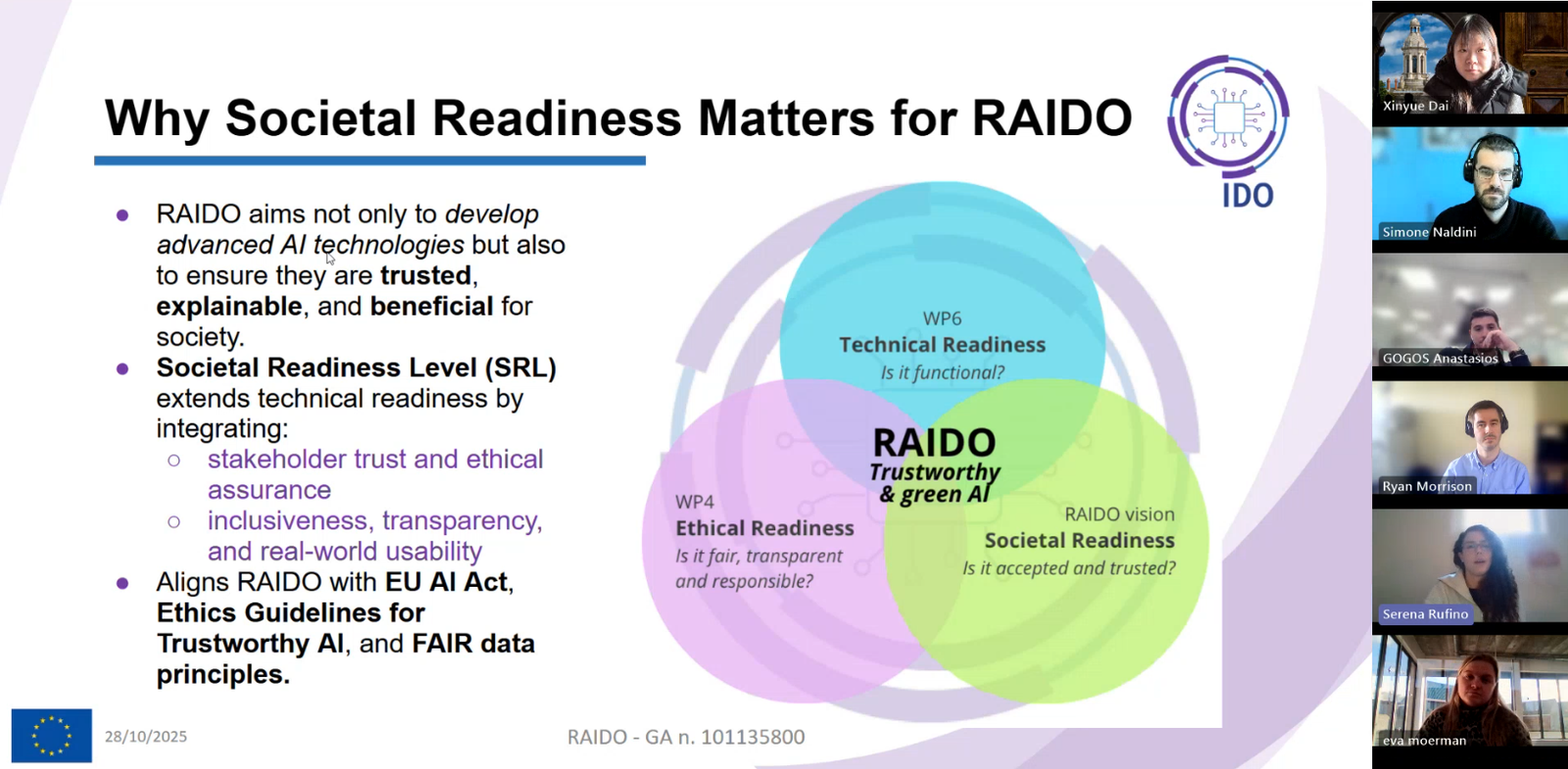
While traditional AI development often focuses on “Does it work?”, RAIDO’s approach asks, “Is it accepted and trusted?” The workshop emphasized that Societal Readiness Level (SRL) must evolve in parallel with technical progress.
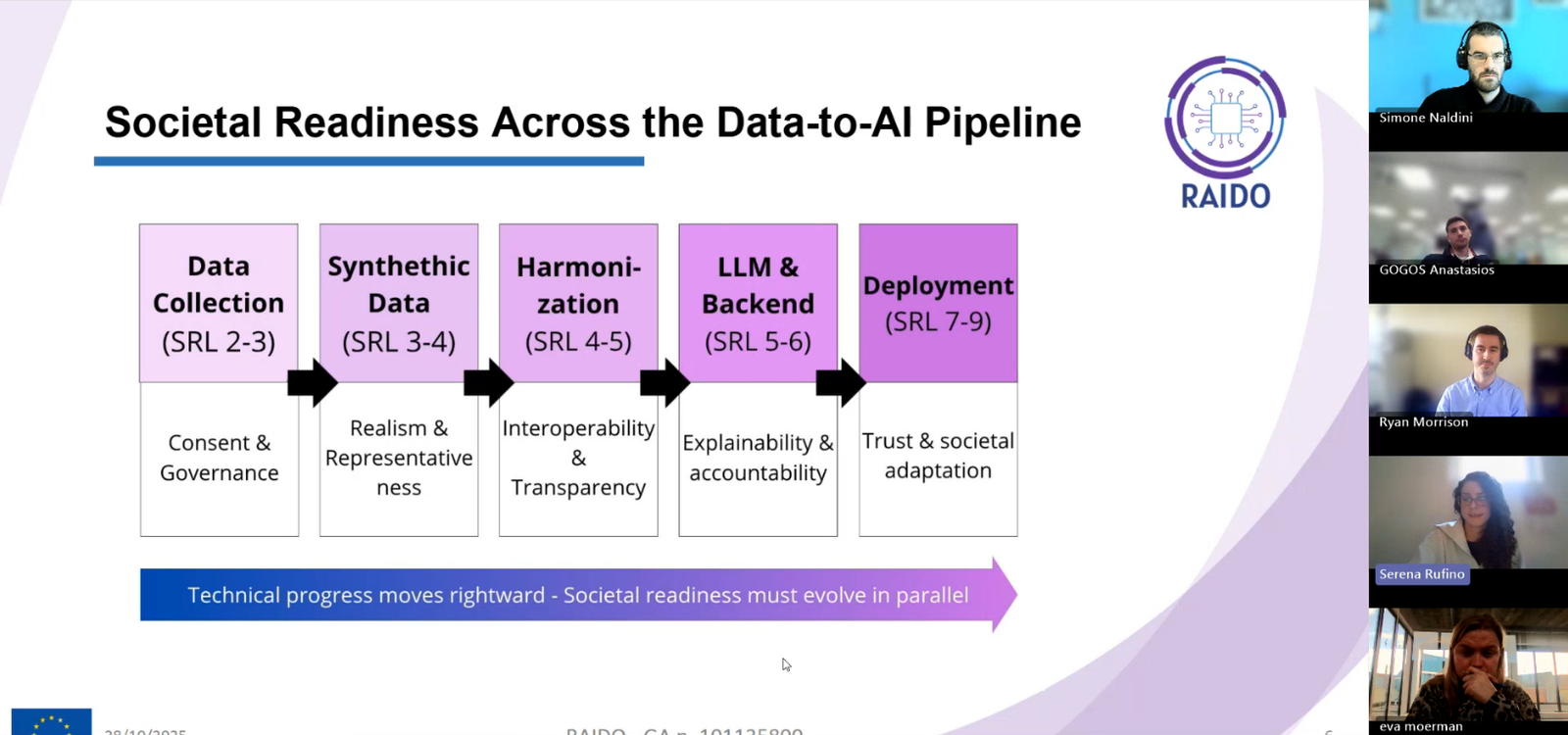
As technical development moves from data collection toward deployment, the project tracks societal readiness across the entire pipeline:
- Data Collection & Synthetic Data: Ensuring consent, governance, and representativeness.
- Harmonization & LLMs: Focusing on interoperability and explainability.
- Deployment: Moving toward full trust and societal adaptation (SRL 7-9).
“Ethics by Design” in Practice
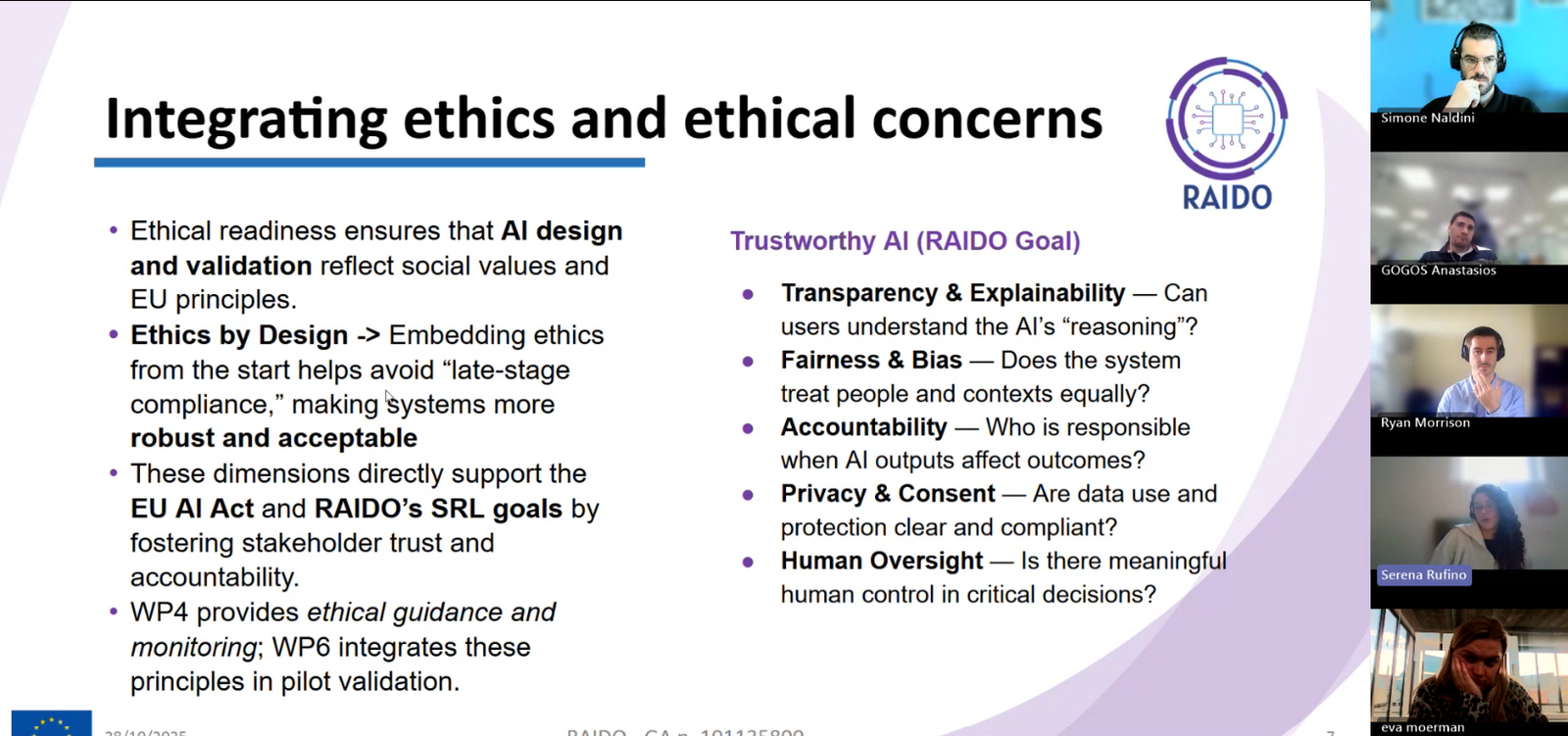
A core takeaway from the sessions was the implementation of Ethics by Design. By embedding ethical considerations from the earliest stages of development, RAIDO aims to avoid “late-stage compliance” issues and create more robust, acceptable systems.
The workshop identified five pillars of Trustworthy AI that guide the RAIDO vision:
- Transparency & Explainability: Can users understand the AI’s “reasoning”?
- Fairness & Bias: Does the system treat people and contexts equally?
- Accountability: Who is responsible for the AI’s outputs?
- Privacy & Consent: Is data protection clear and compliant?
- Human Oversight: Is there meaningful human control in critical decisions?
The Strategic Role of Standardization
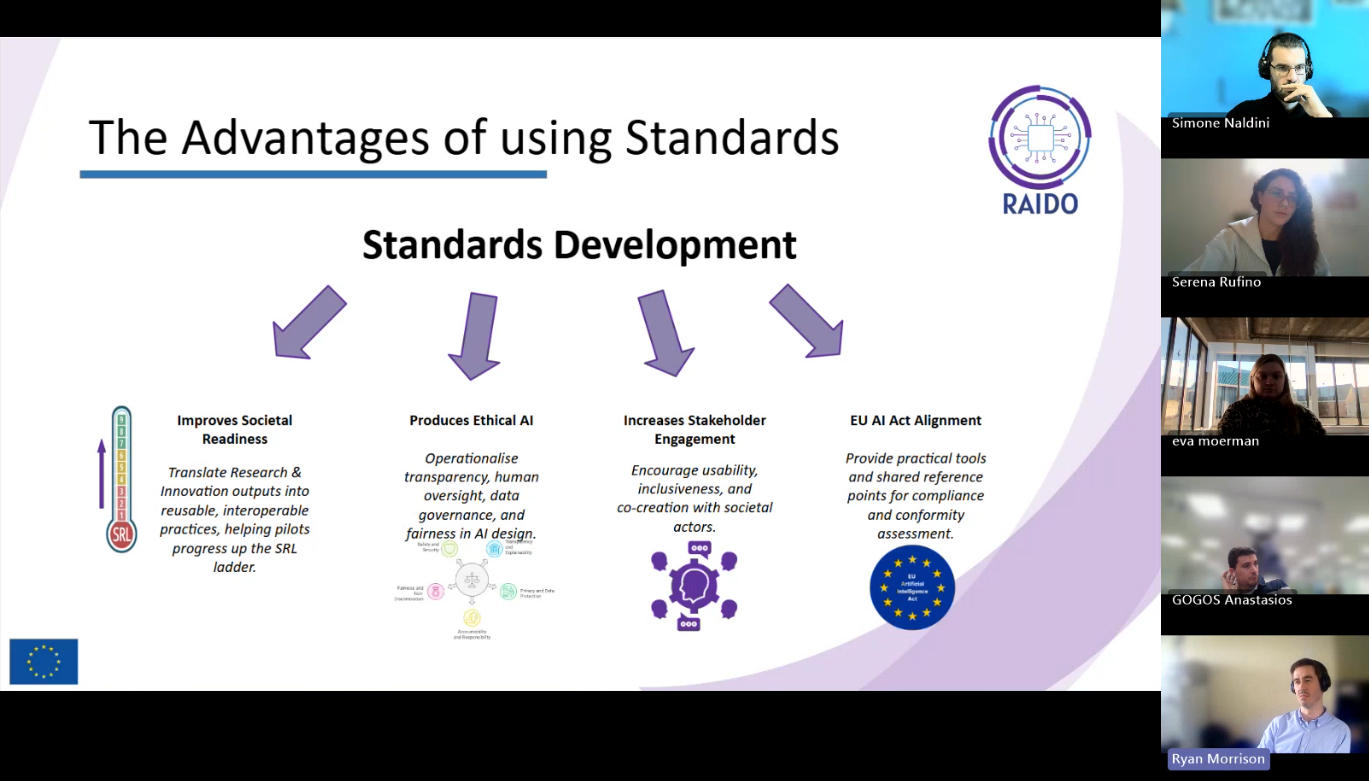
Standardization was highlighted not just as a regulatory requirement, but as a tool for consistency, trust, and interoperability. By adopting standard definitions for data formats, benchmarks, and transparency, RAIDO ensures that its outputs are:
- Regulation-Ready: Directly aligned with the EU AI Act.
- Stakeholder-Centric: Encouraging co-creation with societal actors.
- Scalable: Translating research into reusable, interoperable practices.
Pilot-Specific Reflections
The program featured four dedicated sessions—one for each RAIDO pilot. This allowed partners to apply these high-level ethical and societal frameworks to their specific real-world use cases, ensuring technical work remains anchored in the needs of the society it serves.
Summary
- RAIDO successfully hosted a workshop series focused on integrating Ethics, Societal Readiness (SRL), and Standardisation across its four pilot projects.
- The sessions emphasized an “Ethics-by-Design” framework and alignment with the EU AI Act to ensure technical innovations are trusted, transparent, and beneficial.
- By embedding these principles across the data-to-AI pipeline, RAIDO is bridging the gap between functional technical development and real-world societal acceptance.
Find us on Social Media